Concrete retaining walls in Hayward CA - a wall that drains and holds its ground
Leaning wall, wet slope or a yard that keeps sliding toward the patio? We pour a concrete wall with drainage built in behind it.
- Fully licensed and insured.
- Free in-person estimates.
- We respond within 1 business day.
Does your yard need a poured concrete retaining wall?
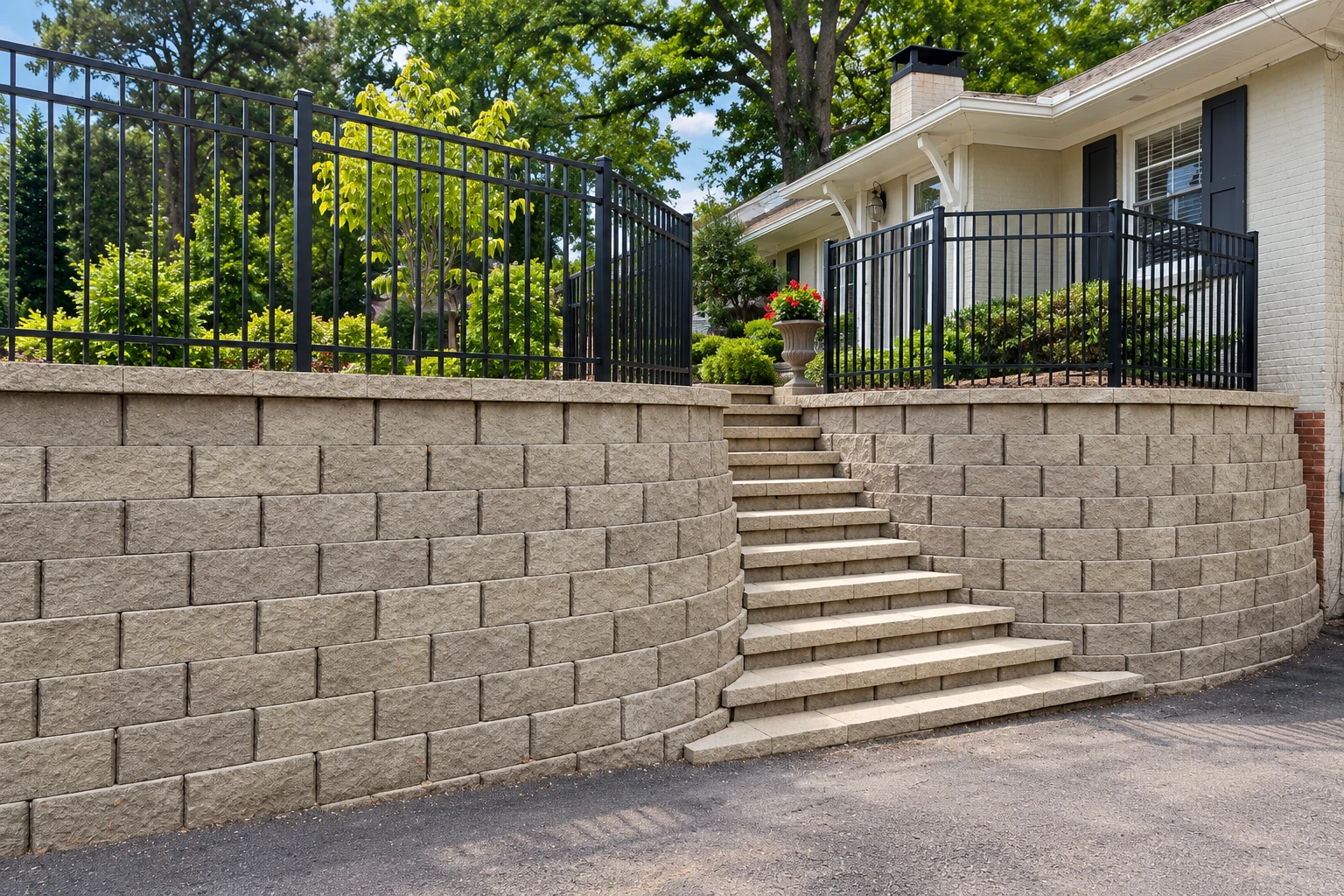
A concrete retaining wall in Hayward is a wall we form and pour in place on a footing, with drained gravel behind it, so a slope or a raised yard stays put instead of pushing toward your patio, driveway or house.
Most calls start the same way. A slope has been shedding dirt onto the patio for a few winters, or an old timber wall has started to lean, and the job got put off. The first question is whether your ground needs a poured structural wall at all. When it does, the price moves with the wall's height and length, how much digging, gravel and drain pipe go behind it, how easily a crew and a concrete truck can reach it, and whether it needs an engineer's design. The schedule mostly turns on that design and the permit, and we check which office issues it for your address and file when the job needs one. The written estimate I send after measuring prices what goes under and behind the wall, not just the part you'll look at.
How do you know a retaining wall is in trouble?
Wall leaning out at the top
If the top of the wall sits further out than the bottom, the ground behind it is winning, and that's usually water that can't get out. A leaning wall has made up its mind, and waiting tends to mean rebuilding more of it, plus whatever it lands on.
Wet spots or white crust
Damp patches, trickles after rain or a chalky white crust on the face mean water is working through the wall instead of draining out behind it. That trapped water is the same pressure that pushes walls over, so it's worth a look before the next wet season.
Dirt spilling onto paving
Soil washing onto the patio, the walk or the driveway every winter means the slope has no real support, or the old wall has quit. Left alone, it undercuts the edge of the paving and the fence line, which turns one job into two.
How we build a concrete retaining wall
Walls mostly fail from water building up behind them, so how yours drains is the first thing I look at, before height or finish. Then we dig out for the footing, the wide concrete base the wall stands on, set rebar, the steel bars that hold the wall together against the push of the soil, and build the forms. We pour, let the wall cure, which is the wait while concrete gains strength, and only then backfill with gravel and a drain pipe so water has a way out at the bottom instead of piling up behind. When a wall needs an engineer's design, we build to it. If the budget gets tight, I'd rather you skip a fancy face than skimp on drainage, because a good-looking wall full of water still leans. The work is backed by our satisfaction guarantee.
A wall usually comes with flat ground on one side of it, and that's often the reason for building it. If you're cutting a terrace into the slope for a concrete pool deck, the wall is what holds that level ground up, so we plan the drainage for both at once. The same goes for a shed or shop pad, where concrete floor installation on new level ground only makes sense once the wall beside it is solid.
Low wall at a bed or patio edge
This suits a short step in the yard that holds back a planting bed or squares off the edge of a patio. It still gets a footing and a way for water to get out, just less of everything, which keeps the cost down.
Taller wall holding a slope or load
This is the wall for a real hillside, or one with a driveway, a structure or more slope sitting above it. It usually needs a permit and an engineer's design, and it's where drainage matters most.
Get a written estimate for your retaining wall
We get back to you within one business day to set a time. I come out, measure the wall and the ground behind it, then send a free written estimate, and there's no obligation to go ahead.
(510) 264-7080- Based in
- Hayward, CA 94541
- Hours
- Mon–Sun: 7 AM–11 PM
What happens after you call about a retaining wall in Hayward?
Here's how a wall goes from your first call to the final walk-through, and where the city's rules come into it.
Call or send the form
You reach us at (510) 264-7080 or through the form, and we set a time for me to come out. It helps to have the rough length and height of the wall, and whether the ground behind it slopes.
I measure and check drainage
I look at where the water runs, measure, and ask what the wall has to hold up and how you use the yard. The written estimate spells out the footing, gravel and drain line along with the wall, so the hidden part isn't a surprise later.
We sort out design and permits
If the wall needs a permit, we line up the engineer's design and file before any digging starts. The start date follows the permit, so I'll tell you where things stand rather than guess.
We build, then walk it together
Our crew digs, forms, pours and backfills within the city's construction hours, 7 a.m. to 7 p.m. Monday to Saturday and 10 a.m. to 6 p.m. on Sundays and holidays. At the end I walk the wall with you and show you where the water comes out.
Why Hayward homeowners call Creekstone Hayward Concrete Company for walls
I measure every wall myself
The person who looks at your slope and writes the estimate is the same one running the crew on site. Nothing gets lost between what you asked for and what gets poured.
Building in Hayward since 2017
I came back to concrete in 2017 and started this business here, partly because I'd driven past enough bad slabs. Nine years in, the work we're known for is the part underneath that nobody looks at.
Fully licensed and insured
California has a concrete contractor license class that covers forming, pouring and finishing concrete, so ask anyone you're considering which license they hold. We're fully licensed and insured.
On a retaining wall, the part that decides how long it stands is behind it, so that's what I'll want to see first. Set up a site visit and I'll come measure.
Retaining walls, slopes and permits in Hayward
In Hayward, the city requires a building permit before work starts on any retaining wall, with one narrow exception. A wall no taller than 4 feet that carries no extra load from above, which the city calls a surcharge, and holds back no flammable or combustible liquids can skip it. When a permit is needed, the application has to include a design certified by a registered design professional, so a permitted wall starts on an engineer's desk, not in your yard. We build to that design and file the permit for you.
Reshaping the slope behind a wall can also need the city's separate grading permit, so we work out every permit the job needs in one go. The state has released preliminary earthquake fault zone maps covering Hayward and Alameda County, still under public review and not naming individual properties. We see the same steep backyards on jobs in Castro Valley and Fairview, and there we check whether the county or a city issues the permit.
Questions about concrete retaining walls in Hayward
How much does a concrete retaining wall cost in the Bay Area?
A retaining wall in the Bay Area usually costs about $50 to $65 per square foot. That's the going rate around here, not our price, and height, drainage, access and any engineering decide where a given wall falls. I measure on site and send a written estimate with those parts priced out.
Does a short retaining wall need a permit in Hayward?
Not always, because a wall 4 feet or under can skip the permit only when nothing extra presses down on the ground behind it. The city treats that ground as unloaded when it's level for a distance at least as long as the wall is tall, so a short wall with a slope or a driveway above it usually still needs one.
How does the city of Hayward measure retaining wall height?
Hayward measures from the bottom of the footing to the top of the wall, not just the part you can see. A wall that looks comfortably short above the dirt can pass 4 feet once the footing counts, so I give you the height on that basis at the estimate.
What causes a retaining wall to fail?
Most retaining walls fail from water or soil moisture building up behind them and pushing. Every wall should let that water drain down and away, through gravel backfill or drainage blankets and drain pipes, so ask any contractor how yours will drain.
How long does a concrete retaining wall last?
A well-built poured wall is meant to last for decades, and one engineering study gives cast-in-place concrete walls a design service life of 75 years. That figure comes from Texas highway walls, so treat it as a design target rather than a promise for your yard, and know that drainage does a lot to decide it.
Is a poured concrete retaining wall better than a stacked stone wall?
For a wall that holds real ground, usually yes, and for a low garden bed a stacked wall is often enough. Dry-laid walls of stacked, open-joint material cost much less, while poured walls have proved rigid and cost-effective where the backfill is low. Deciding which one your site needs comes first, since that choice shapes the budget.
Related concrete work around a new wall
Concrete floor installation
If the wall is making room for a shed, studio or workshop, a concrete floor on a properly packed base turns that new flat spot into usable space.
Concrete pool decks
A pool deck should shed water away from the pool and the house, and on a sloped lot it often sits on ground a retaining wall holds level.
Service areas for concrete retaining walls
Creekstone Hayward Concrete Company is based in Hayward, CA, and takes jobs in the cities around it, on both sides of the bay. That includes San Leandro and Union City, two of the 12 cities with their own page below.
Hayward, CA
Get your retaining wall measured and priced
The sooner I see where the water goes behind your wall, the sooner you know whether it's a simple pour or a job that needs a permit and a design.